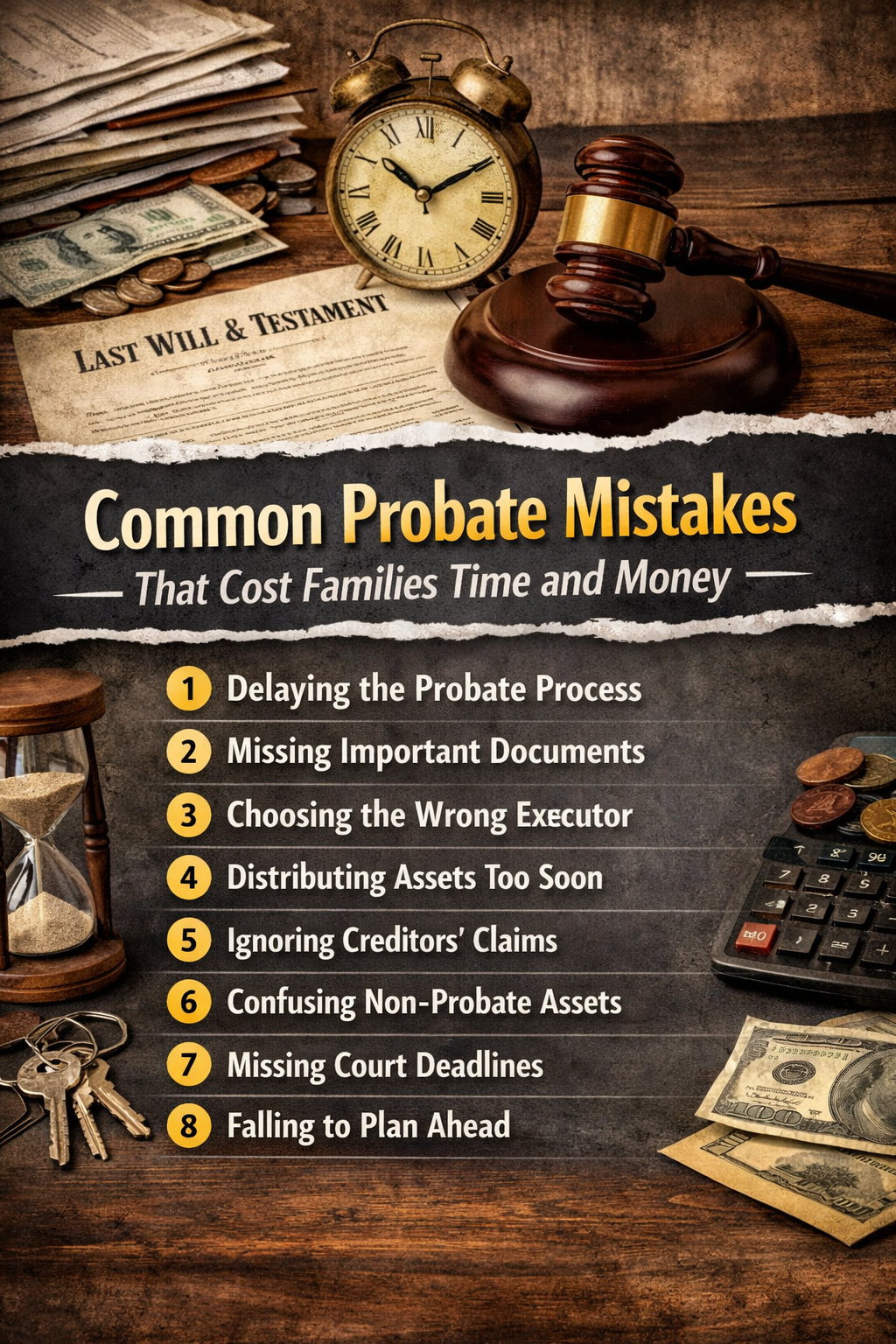
When a loved one passes away, most families expect probate to be fairly straightforward. Unfortunately, probate often becomes longer, more expensive, and more stressful than necessary— not because of bad intentions, but because of common and avoidable mistakes.
Below are some of the most frequent probate errors we see, and how they end up costing families both time and money.
Tip: If you’re in the early stages of probate, getting organized right away often saves the most time later.
1) Waiting Too Long to Start the Probate Process
Many families delay opening probate because they’re grieving, overwhelmed, or unsure what to do next. While that’s understandable, waiting too long can create avoidable complications.
Why this matters
- Creditors still have rights
- Property expenses (insurance, taxes, maintenance) continue
- Assets may be frozen or inaccessible
- Deadlines can be missed
2) Assuming “There’s a Will, So We Don’t Need Probate”
A very common misconception is that having a will avoids probate. It doesn’t.
A will typically must be validated by the court, and probate is often required to legally transfer assets and carry out the will’s instructions.
3) Losing (or Not Finding) Important Documents
Probate slows down quickly when key documents are missing, such as:
- The original will
- Death certificates
- Deeds
- Financial account statements
- Beneficiary information
When documents can’t be found, the court may require extra filings or evidence—adding cost and delay.
4) Choosing the Wrong Personal Representative
The personal representative (executor) plays a critical role. Choosing someone who is disorganized, unavailable, in conflict with beneficiaries, or unfamiliar with financial matters can slow probate down dramatically.
Errors at this stage can lead to additional legal fees, court intervention, and sometimes personal liability for the representative.
5) Distributing Assets Too Early
Some families try to “do the right thing” by distributing money or property before probate is complete. This can be a serious and costly error.
Why it’s risky
- Valid creditor claims may still exist
- Taxes may not be fully settled
- The personal representative may be held responsible for improper distributions
6) Ignoring Creditors and Court Deadlines
Probate has strict timelines for notifying creditors, responding to claims, and completing required filings. Missing deadlines can extend probate unnecessarily and increase court involvement and cost.
7) Confusing Probate Assets vs. Non-Probate Assets
Not all assets go through probate, and many families assume everything does—or nothing does. Confusion here often leads to unnecessary filings, delays, or disputes among heirs.
Common issues include outdated beneficiary designations, misunderstandings about joint ownership, and missing payable-on-death / transfer-on-death arrangements (where applicable).
8) Failing to Plan Ahead
The most expensive probate mistake usually happens before death: not having a proper estate plan in place.
Even modest planning can reduce delays, lower costs, and prevent conflict—because it gives clear instructions and avoids unnecessary court supervision.
Final Thoughts
Probate doesn’t have to be a nightmare—but it often becomes one when families rely on assumptions, outdated information, or good intentions without a clear process.
Understanding these common mistakes can help families avoid unnecessary delays, reduce court costs, and move through probate more efficiently.
Need Help With Probate or Planning Ahead?
If you’re dealing with probate now—or you want to make things easier for your family—getting clear advice early can make all the difference.
Schedule a Consultation